Paintless Dent Repair Is the Right Fix for Hail Damage
Hail Damage
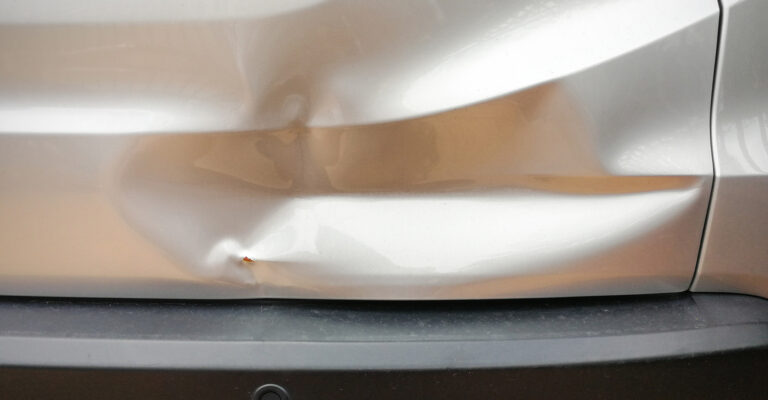
A hailstorm doesn’t leave one dent. It leaves dozens, sometimes hundreds, scattered across your hood, roof, and trunk. That sounds like a worst-case scenario for repair, but hail damage is one of the best matches for paintless dent repair. The dents are usually shallow, the paint is usually intact, and the metal usually hasn’t stretched past the point of springing back into shape. That’s exactly the combination PDR is built for.
Why Hail Dents Are a Good Fit
A single impact dent, like a shopping cart ding, hits one spot hard enough to stretch the metal locally. Hail is different: the impacts are spread across the panel, and each one is smaller and shallower on its own. On most vehicles, that means the paint stays unbroken even where the metal has flexed. Unbroken paint is the deciding factor for PDR: if it’s intact, a technician can work the dent out from behind the panel without ever needing to match or repaint color.
We check every panel by hand before quoting a repair, because hail damage varies more than people expect. A storm that leaves shallow, evenly spread dents across a hood is a clean PDR job. The same storm can leave a handful of dents right on a body line or a sharp edge, where the metal is under more tension and harder to coax back. Large hail can also crack paint outright, especially near edges or on thinner aluminum panels. When we find damage like that, we tell you which panels are straightforward PDR and which ones need a body shop, rather than promising one process for the whole car.
Roofs and hoods tend to be the most reliable candidates, since they’re wide open panels with plenty of room to work the metal from underneath. Tighter spots (near trim, moldings, or antenna mounts) sometimes call for glue-pulling instead of rod access, where a technician attaches a tab to the dent and pulls it out from the front. Same principle, different access point, same result: no paint, no filler.
What “Effective” Means Here
For the panels where PDR applies, it restores the surface to pre-dent condition, not “close enough,” but back to the factory shape, because the technician is working the original metal rather than replacing it with filler and paint. The factory clear coat and color stay exactly as the manufacturer applied them, which matters more after a hailstorm than after a single dent, since you’re often looking at repair across four or five panels at once. Repainting that much surface area raises the odds of a visible color or texture mismatch between panels. PDR carries no such risk, because nothing gets repainted.
It’s also faster at scale. A body shop repairing extensive hail damage is grinding, filling, sanding, and repainting multiple panels. That’s a multi-day job even before you factor in drying and cure time between coats, and it can stretch to weeks if parts or paint have to be ordered. PDR technicians can work panel by panel with specialized tools and often finish a full hail repair in a day or two, depending on how many panels are affected. And because insurers are generally aware that PDR costs less than a full repaint, it’s frequently the preferred route for a hail claim rather than something you have to fight for.
What We Do Differently for Hail Claims
Hail repairs get the same three-step process as any other PDR job, with more attention up front given the panel count.
- 1 Quote
We’ll ask to see the vehicle in person rather than quote from photos. Once we set up our light boards around the car, we typically find more damage than shows up in natural light or in pictures, and we don’t want to hand you a number that doesn’t match what we find. You’ll get a free, honest estimate once we’ve had a look in person.
- 2 Agreement
We walk through the full scope: which panels we’re repairing, the timeline, and the savings compared to a body shop repaint across that many panels.
- 3 Repair
We work through the vehicle panel by panel. Minor hail damage typically takes 1-2 days. More severe damage, spread across multiple panels, usually takes at least a week. We offer concierge pickup if getting the car to us is the harder part of your week.
Every technician on a hail job is ARC Certified, with additional T-Form and Dent Wizard training, and every repair is fully insured. One note on CarFax: if you file an insurance claim for the hail damage, that claim will show up on your CarFax report, though it typically doesn’t affect your vehicle’s value. If you handle the repair without filing a claim, it stays off CarFax entirely. Either way, the factory finish stays untouched, since no paint or bodywork happens.
If your car came through a storm with more dings than you want to count, that’s still worth a look before you assume it needs a full repaint. Bring it in for an in-person look under our light boards, and we’ll tell you straight what PDR can fix and what it can’t — most hail damage falls squarely in the first category.